
Primary service
Asphalt shingle roof rejuvenation in Maine & New Hampshire
Why asphalt shingles age
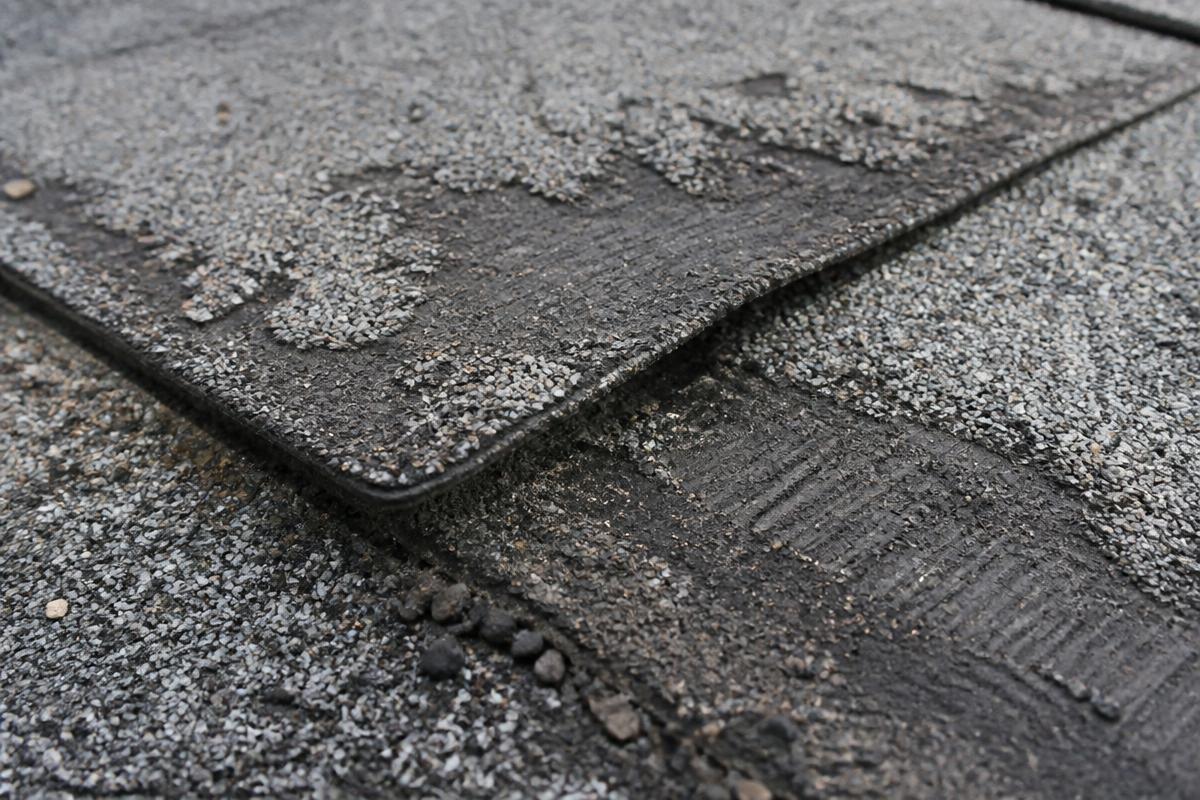
An asphalt shingle is a mat — usually fiberglass — saturated with asphalt and surfaced with mineral granules. The asphalt provides flexibility and water resistance; the granules shield the asphalt from ultraviolet light.
Over years of thermal cycling, lighter components in the asphalt migrate out. The shingle becomes stiffer. Edges begin to lift because a stiff shingle no longer lies flat against the deck. The granule bond loosens, so more granules wash off, exposing more asphalt to UV. The process feeds itself.
Loss of flexibility is the specific problem
A flexible shingle absorbs thermal movement, wind lift and impact. A brittle one cracks. In Maine and New Hampshire this matters more than in milder climates, because a long freeze/thaw season means water repeatedly enters and expands within small surface fissures.
What rejuvenation is intended to accomplish
The treatment targets the asphalt binder inside an aging shingle rather than forming a film over the roof surface. The goal is a maintenance outcome: keeping shingles that are still doing their job in serviceable condition longer.
Roof Vital does not publish a specific number of added years, a guaranteed savings figure, or any claim that treatment makes shingles new again. Manufacturer performance data and warranty terms are published on this site only once we hold documentation supporting them.
Candidate roofs and non-candidate roofs
Eligibility is decided by condition, not age. A well-ventilated 22-year-old roof can be in better shape than a poorly ventilated 14-year-old one.
| Approach | Targets | Fixes structure? |
|---|---|---|
| Rejuvenation | Shingle flexibility | No |
| Coating | Surface film / reflectivity | No |
| Repair | A specific defect | Locally |
| Replacement | The whole roof system | Yes |
Your roof may qualify
- Asphalt shingles roughly 8–20 years old
- Shingles drying out and losing flexibility
- Normal, even granule loss for the roof's age
- Roof decking appears sound underfoot
- No major active leaks
- No widespread missing shingles
- Roof has not structurally failed
Your roof may need repair or replacement
- Major active leaks
- Rotting or soft roof decking
- Structural damage or sagging
- Large areas of missing shingles
- Severe, widespread curling or cupping
- Extensive physical deterioration or exposed mat
- Major storm or impact damage
The application process
Every project follows the same sequence. Nothing is applied before the roof has been inspected and found eligible.
- Property preparation. Debris clearing, protection of plantings, walkways, driveways and any adjacent surfaces.
- Roof preparation. Loose debris and moss addressed; minor shingle issues flagged. Significant repairs are roofing work and are handled before treatment, not instead of it.
- Application. Applied at the manufacturer's specified rate and within its temperature and dry-weather conditions. In our region that concentrates the season in the warmer, drier months.
- Final inspection and cleanup. Coverage confirmed, property walked, protection removed.
Typical project timeline
Most single-family asphalt roofs in our service area are treated in a single visit of a few hours after preparation. Larger or more complex roofs take longer. There is no tear-off, no dumpster and no multi-day disruption.
What homeowners should expect
A crew on the roof and around the perimeter for part of a day, access needed to the full roof plane, and a walkthrough at the end. We will explain access and any product-specific guidance from the manufacturer before the work date.
Cost
Rejuvenation is priced by roofing square, adjusted for pitch, complexity, stories, access and any preparation the roof needs. See roof rejuvenation cost for current planning ranges, and rejuvenation vs replacement for the side-by-side comparison.
Maintenance after treatment
A treated roof still needs normal maintenance: gutters kept clear, overhanging limbs trimmed, moss and debris addressed, and flashing and penetrations checked periodically. Rejuvenation does not remove that obligation.
Safety and environmental considerations
The clearest environmental benefit of treating a qualifying roof is what does not happen: no tear-off, and no roof's worth of shingles going to a landfill. Product-specific safety and environmental characteristics are published here only once Roof Vital holds the manufacturer documentation supporting them.
Roof rejuvenation questions
What is roof rejuvenation?
Roof rejuvenation is a maintenance treatment applied to an existing asphalt shingle roof. It is intended to address the drying and stiffening that happens as shingles age, helping the shingles retain flexibility. It is not a repair method, a coating, or a replacement for structural roofing work.
How is rejuvenation different from a roof coating?
A coating adds a new surface layer on top of the roof and changes its appearance and weight. Rejuvenation is absorbed into the existing shingle rather than forming a separate film over it, and it does not change the roof to a coated system.
How long does the application take?
Most single-family asphalt roofs in our service area are treated in a single visit, typically a few hours, after the roof and property are prepared. Larger or more complex roofs may take longer.
Does every roof qualify?
No. Rejuvenation is only appropriate for asphalt shingle roofs that are aging but still structurally sound. Roofs with rotting decking, structural damage, major active leaks, widespread missing shingles, or severe deterioration are not candidates.
How old can a roof be and still qualify?
Age alone does not decide it — condition does. Roofs in roughly the 8–20 year range are the most common candidates, but a well-ventilated 22-year-old roof can be in better shape than a poorly ventilated 14-year-old one. We assess the shingles rather than the install date.
Can a 20-year-old roof be rejuvenated?
Sometimes. If the shingles are intact, the mat is not exposed across the field, the decking is sound and there are no major leaks, a 20-year-old asphalt roof can be a candidate. If the shingles are already cracking through or shedding heavily, it usually is not.
Can rejuvenation fix leaks?
No. Rejuvenation is not a leak repair. Active leaks indicate a failure at the shingle, flashing, or decking level and need repair or replacement first. If a leak is found during assessment, we will tell you that before discussing treatment.
Not sure where your roof stands?
A free assessment tells you which of the three paths fits your roof — including when rejuvenation is not appropriate.